BIM for Smart Buildings: Where Intelligent Design Meets Digital Precision
The construction and real estate industries are transforming faster than ever. Smart technologies, sustainability goals, and data-driven decision-making now define successful projects. At the center of this transformation stands BIM for Smart Buildings a powerful approach that connects design intelligence with real-world performance. Building Information Modeling is no longer limited to 3D drawings. It has evolved into a strategic framework that supports analysis, automation, and lifecycle management.
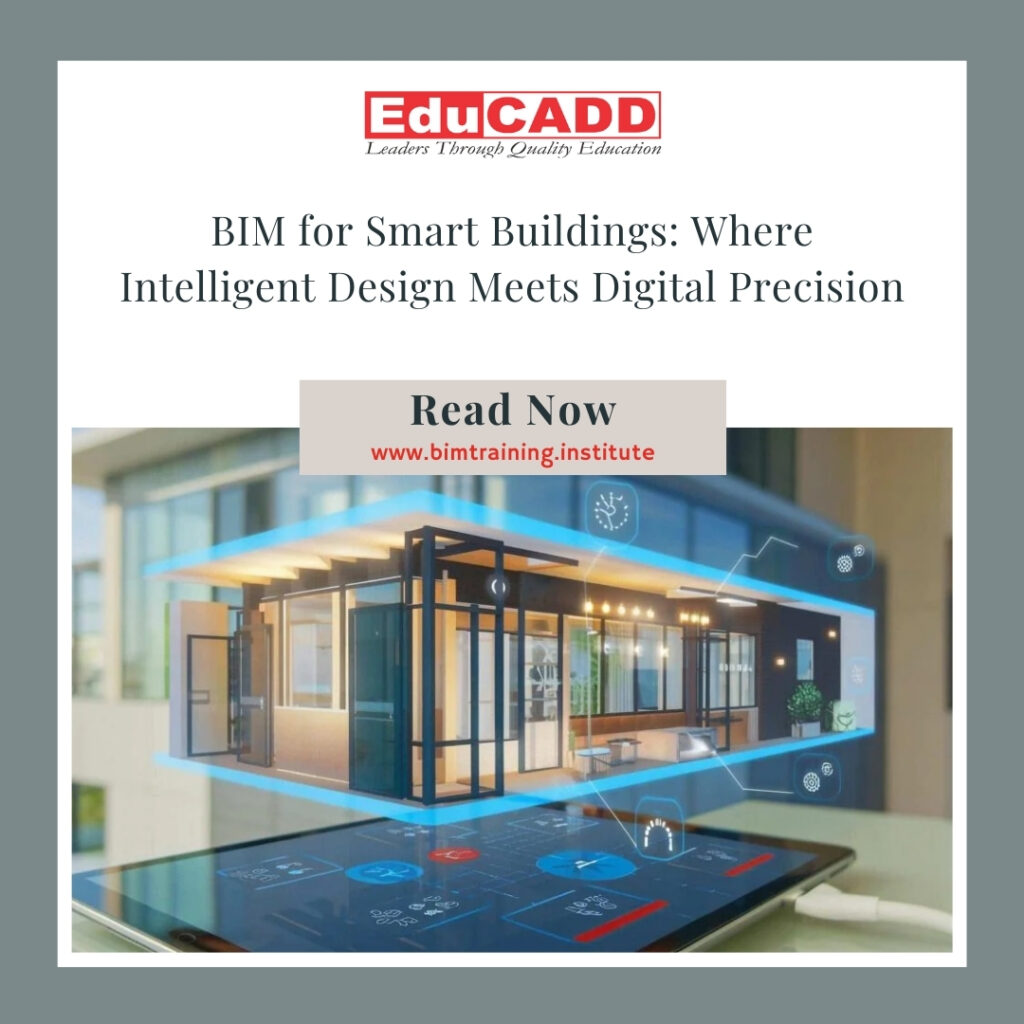
This blog explores how BIM for Smart Buildings enables professionals to design better, analyze deeper, and deliver smarter outcomes. Each section explains a critical aspect in detail, offering clarity, depth, and practical insight for industry professionals.
1. Understanding BIM for Smart Buildings
BIM for Smart Buildings represents the integration of digital building models with intelligent systems. It combines geometry, data, and behavior into one collaborative platform. Unlike traditional CAD, BIM creates a living digital twin of a building.
This digital model stores architectural, structural, and MEP data. It also connects with sensors, IoT devices, and automation platforms. As a result, stakeholders gain real-time visibility into building performance. BIM for Smart Buildings supports informed decisions from concept to operation.
Moreover, teams collaborate on a single source of truth. Errors reduce, coordination improves, and outcomes become predictable. This foundation sets the stage for smarter design and delivery.
2. The Role of Smart Buildings in the Digital Era
Smart buildings respond intelligently to users, systems, and environments. They optimize energy, comfort, safety, and operations through connected technologies. BIM for Smart Buildings acts as the backbone of this intelligence.
With BIM, designers embed data into every component. Sensors, HVAC units, lighting systems, and controls align within the model. This alignment ensures seamless integration during construction and operation.
As urbanization grows, smart buildings reduce operational costs and environmental impact. BIM for Smart Buildings ensures these benefits begin at the design stage, not as afterthoughts.
3. Intelligent Design Through Data-Rich Models
Designing smart buildings demands more than creativity. It requires precision and foresight. BIM for Smart Buildings enables intelligent design through data-rich models.
Each element carries information about materials, performance, cost, and maintenance. Designers test options early and compare outcomes. This process improves quality while controlling budgets.
Through BIM, architects simulate daylight, airflow, and spatial efficiency. Engineers coordinate systems without clashes. BIM for Smart Buildings transforms design into a strategic, data-driven process.
4. Enhancing Collaboration Across Disciplines
Collaboration defines project success. BIM for Smart Buildings creates a shared environment where teams work together seamlessly.
Architects, engineers, contractors, and owners access the same model. Updates reflect instantly across disciplines. This transparency eliminates silos and miscommunication.
With clear workflows, approvals happen faster. Conflicts resolve early. BIM for Smart Buildings strengthens teamwork and accountability throughout the project lifecycle.
5. Advanced Analysis for Smarter Decisions
Analysis plays a critical role in smart building development. BIM for Smart Buildings supports advanced simulations that guide better decisions.
Teams analyze energy performance, structural behavior, and thermal comfort before construction begins. These insights reduce risk and improve sustainability.
By testing scenarios digitally, stakeholders avoid costly changes later. BIM for Smart Buildings empowers predictive analysis, ensuring projects meet performance goals with confidence.
6. Energy Efficiency and Sustainability Optimization
Sustainability drives modern construction priorities. BIM for Smart Buildings enables energy-efficient design through precise modeling.
Designers evaluate energy consumption, carbon footprint, and renewable integration. They adjust materials and systems based on data-backed insights.
Green certifications become easier to achieve. Operational savings increase over time. BIM for Smart Buildings aligns environmental responsibility with economic value.
7. Integrating IoT and Building Automation
Smart buildings rely on interconnected systems. BIM for Smart Buildings simplifies IoT and automation integration.
Digital models define sensor locations, control logic, and data flows. During operation, real-time data feeds back into the BIM model.
Facility managers monitor performance and detect issues early. BIM for Smart Buildings bridges the gap between digital planning and intelligent operation.
8. Cost Planning and Financial Predictability
Financial control remains a top concern. BIM for Smart Buildings improves cost planning through accurate quantities and timelines.
With 5D BIM, teams link models to budgets and schedules. Cost impacts update automatically with design changes.
This transparency reduces overruns and disputes. BIM for Smart Buildings ensures financial predictability while supporting design flexibility.
9. Construction Efficiency and Risk Reduction
Construction sites benefit significantly from BIM for Smart Buildings. Detailed models guide sequencing, logistics, and safety planning.
Clash detection prevents rework. Prefabrication becomes easier with precise data. Construction teams work with confidence and clarity.
As risks decrease, productivity rises. BIM for Smart Buildings transforms construction into a controlled, efficient process.
10. Digital Twins and Lifecycle Management
A smart building lives beyond completion. BIM for Smart Buildings supports lifecycle management through digital twins.
The as-built model evolves with real-time operational data. Maintenance teams access accurate information instantly.
Predictive maintenance reduces downtime and costs. BIM for Smart Buildings ensures long-term asset value and performance.
11. Facility Management Made Intelligent
Facility management often struggles with outdated information. BIM for Smart Buildings changes this reality.
Managers use BIM models to track assets, schedules, and performance. Data-driven insights improve decision-making and user comfort.
This approach reduces operational expenses and enhances occupant satisfaction. BIM for Smart Buildings empowers proactive facility management.
12. Supporting Smart Cities and Urban Growth
Smart buildings contribute to smarter cities. BIM for Smart Buildings aligns individual projects with urban infrastructure.
Data integration supports energy grids, mobility systems, and emergency planning. Cities gain resilience and efficiency.
As urban complexity increases, BIM for Smart Buildings becomes essential for sustainable development.
13. Skills, Tools, and Industry Adoption
Adopting BIM for Smart Buildings requires skilled professionals and the right tools. Training and collaboration drive success.
Industry standards and cloud platforms support widespread adoption. Organizations that invest early gain competitive advantage.
BIM for Smart Buildings represents not just technology, but a mindset shift toward intelligence and integration.
14. The Future of BIM for Smart Buildings
The future promises deeper integration with AI, machine learning, and real-time analytics. BIM for Smart Buildings will become more predictive and autonomous.
Designs will adapt dynamically. Buildings will learn from usage patterns. Decision-making will become faster and smarter.
This evolution positions BIM for Smart Buildings as a cornerstone of digital construction.
Conclusion
BIM for Smart Buildings is more than a methodology. It is a strategic enabler for intelligent design, advanced analysis, and efficient delivery. By uniting data, technology, and collaboration, it transforms how buildings are conceived and managed.
From sustainability and cost control to automation and lifecycle performance, BIM for Smart Buildings delivers measurable value. Organizations that embrace this approach today will lead the smart built environment of tomorrow.