BIM for Facility Management (6D BIM): Transforming Buildings into Intelligent Assets
Facility management has moved far beyond routine maintenance and manual record-keeping. Modern buildings are complex systems that demand efficiency, accuracy, and long-term planning. This is where BIM for Facility Management, commonly known as 6D BIM, plays a transformative role. Unlike traditional documentation methods, 6D BIM integrates rich data into a digital model that supports facility operations throughout the building lifecycle. From asset tracking to energy optimization, 6D BIM enables facility managers to make informed decisions with confidence. As organizations focus on sustainability, cost control, and operational excellence, adopting 6D BIM has become a strategic necessity rather than an optional upgrade.
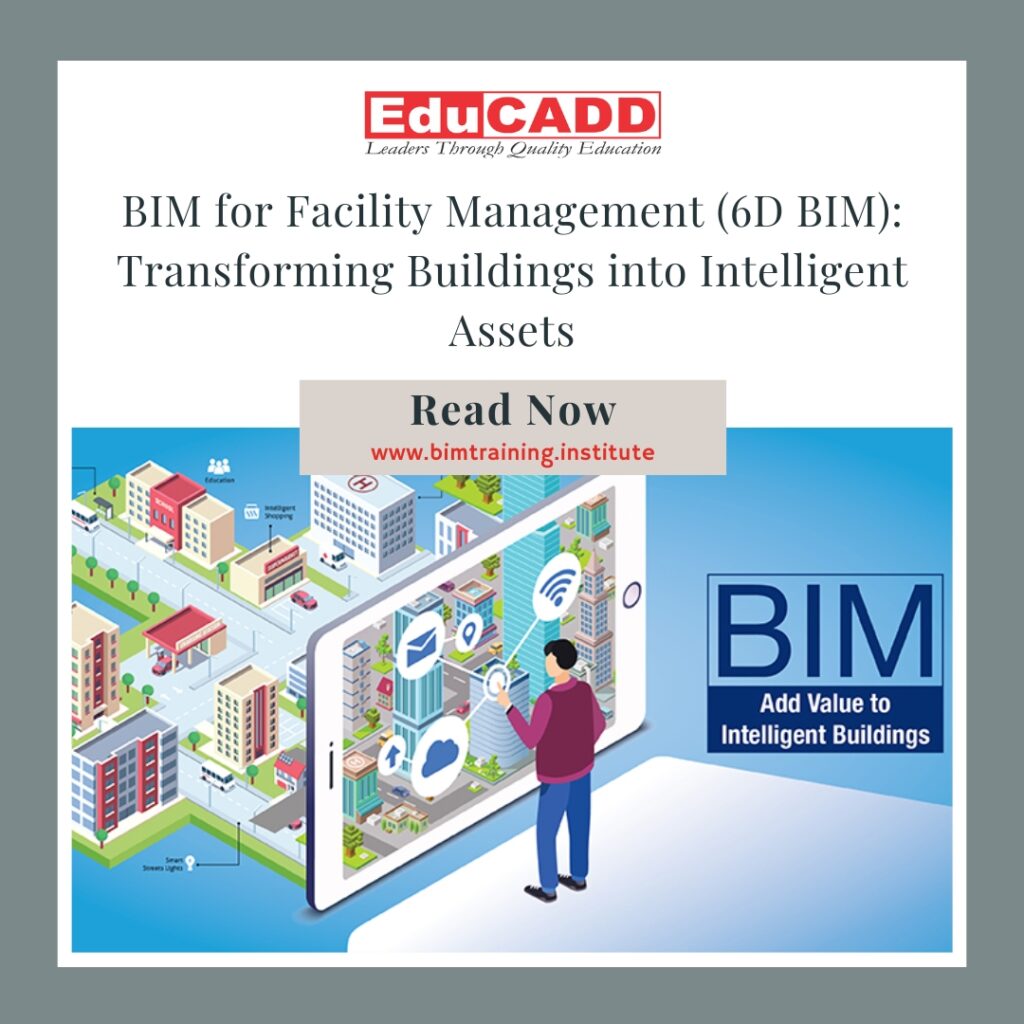
Understanding BIM Dimensions and the Role of 6D BIM
Building Information Modeling evolves across multiple dimensions, each adding a layer of intelligence to the model. While 3D BIM represents geometry, 4D connects scheduling, and 5D introduces cost management, 6D BIM for Facility Management and lifecycle performance. It enriches the digital model with operational data such as maintenance schedules, equipment specifications, warranty details, and performance metrics. As a result, the building becomes a living digital asset rather than a static structure. This dimension ensures that information created during design and construction continues to deliver value long after project handover.
What Is BIM for Facility Management (6D BIM)?
BIM for Facility Management refers to the structured use of BIM data to support building operations, maintenance, and asset management. In 6D BIM, every physical component in the building links to detailed information that facility teams can access instantly. For example, a single click on an HVAC unit reveals its manufacturer, installation date, service history, and replacement cost. This data-driven approach eliminates guesswork and reduces dependency on fragmented documents. Consequently, facility managers gain clarity, control, and operational efficiency throughout the building’s lifespan.
Why Traditional Facility Management Falls Short
Traditional facility management often relies on paper manuals, spreadsheets, and disconnected software systems. These methods increase the risk of data loss, errors, and delayed responses. Moreover, locating accurate information during emergencies becomes extremely difficult. In contrast, 6D BIM centralizes all facility data in a single, intelligent model. This shift reduces operational risks and enhances responsiveness. When information flows seamlessly, teams can act faster, plan better, and maintain higher service standards without unnecessary downtime.
Core Components of 6D BIM for Facility Management
The effectiveness of BIM for Facility Management depends on the quality and structure of embedded data. Key components include asset data, maintenance schedules, spatial information, and performance parameters. Additionally, 6D BIM integrates operational manuals, compliance documents, and warranty information. When combined, these elements create a reliable digital twin of the physical building. This comprehensive dataset empowers facility managers to manage assets proactively rather than reactively, improving long-term performance and cost efficiency.
Asset Management Made Smarter with 6D BIM
Asset management is one of the strongest advantages of 6D BIM. Every asset receives a unique identity within the model, allowing precise tracking from installation to replacement. Facility managers can monitor asset conditions, predict failures, and schedule preventive maintenance effectively. As a result, equipment lifespan increases while unexpected breakdowns decrease. Over time, this structured approach reduces capital expenditure and improves return on investment for building owners.
Preventive Maintenance and Operational Efficiency
Preventive maintenance becomes significantly more effective with BIM for Facility Management. Instead of relying on fixed schedules or manual reminders, facility teams can use real-time data embedded in the model. Maintenance tasks align with actual usage patterns and performance indicators. Consequently, resources are allocated efficiently, and service interruptions are minimized. This proactive strategy not only reduces repair costs but also ensures consistent building performance.
Energy Management and Sustainability Benefits
Energy efficiency has become a priority for modern facilities. 6D BIM supports energy management by linking systems data with performance analytics. Facility managers can analyze energy consumption, identify inefficiencies, and implement optimization strategies. Moreover, sustainability goals become measurable and achievable through data-driven insights. Over time, buildings operate with reduced energy costs and a smaller environmental footprint, supporting both financial and environmental objectives.
Seamless Handover from Construction to Operations
One of the most critical phases in a building’s lifecycle is the transition from construction to facility management. Traditionally, this handover results in incomplete or inconsistent data. However, 6D BIM ensures a smooth and structured handover. Contractors deliver a fully populated BIM model containing all operational data. As a result, facility teams begin operations with complete clarity and confidence, avoiding costly information gaps.
Integration of 6D BIM with Facility Management Software
Modern facility management relies on specialized software platforms. 6D BIM integrates seamlessly with Computer-Aided Facility Management (CAFM) and Integrated Workplace Management Systems (IWMS). This integration enables real-time updates, automated workflows, and centralized reporting. Consequently, facility managers gain a unified view of operations, assets, and performance indicators, enhancing strategic planning and daily decision-making.
Risk Reduction and Improved Compliance
Compliance and safety management require accurate documentation and timely inspections. BIM for Facility Management supports compliance by storing regulatory data and inspection schedules within the model. Facility teams receive timely alerts and clear instructions, reducing the risk of non-compliance. Additionally, emergency planning improves because spatial and system information remains instantly accessible. This structured approach enhances safety and reduces operational risks.
Cost Control Across the Building Lifecycle
Lifecycle cost management represents a major benefit of 6D BIM. Facility managers can forecast operational expenses, plan replacements, and evaluate long-term investment decisions. By analyzing historical data and performance trends, organizations can control costs effectively. Over the building’s lifespan, this strategic visibility results in significant financial savings and improved budget accuracy.
Challenges in Implementing BIM for Facility Management
Despite its advantages, implementing 6D BIM presents challenges. Data standardization, stakeholder coordination, and initial setup require careful planning. Additionally, teams need proper training to maximize the system’s potential. However, with clear implementation strategies and defined data requirements, organizations can overcome these challenges successfully. The long-term benefits far outweigh the initial efforts involved.
Future of Facility Management with 6D BIM
The future of facility management is digital, intelligent, and data-driven. 6D BIM will continue to evolve with technologies such as IoT, AI, and digital twins. These integrations will enhance predictive maintenance, real-time monitoring, and automated decision-making. As buildings become smarter, facility managers will shift from operational roles to strategic leadership positions, driving value through innovation.
Conclusion
BIM for Facility Management represents a fundamental shift in how buildings are operated and maintained. By transforming static structures into intelligent digital assets, it enables efficiency, sustainability, and long-term cost control. Facility managers gain access to accurate, actionable data that supports informed decisions throughout the building lifecycle. As the built environment grows increasingly complex, adopting 6D BIM is no longer optional. It is an essential step toward smarter, more resilient, and future-ready facilities.