Construction projects are becoming more complex, more data-driven, and more time-sensitive than ever before. As infrastructure expands and client expectations rise, project teams can no longer rely on isolated tools and disconnected workflows. They need integrated systems that connect design, scheduling, cost control, and field execution in real time. This is where BIM Construction Planning Integration software becomes a true game changer.
Building Information Modeling (BIM) has transformed the way buildings are designed and visualized. Meanwhile, construction planning software has improved scheduling, resource allocation, and progress tracking. However, when these two systems operate independently, valuable data remains siloed. As a result, teams struggle with miscommunication, rework, and delays. By integrating BIM with construction planning software, organizations can unify design intelligence with execution strategy. Consequently, they gain better visibility, stronger collaboration, and more predictable outcomes.
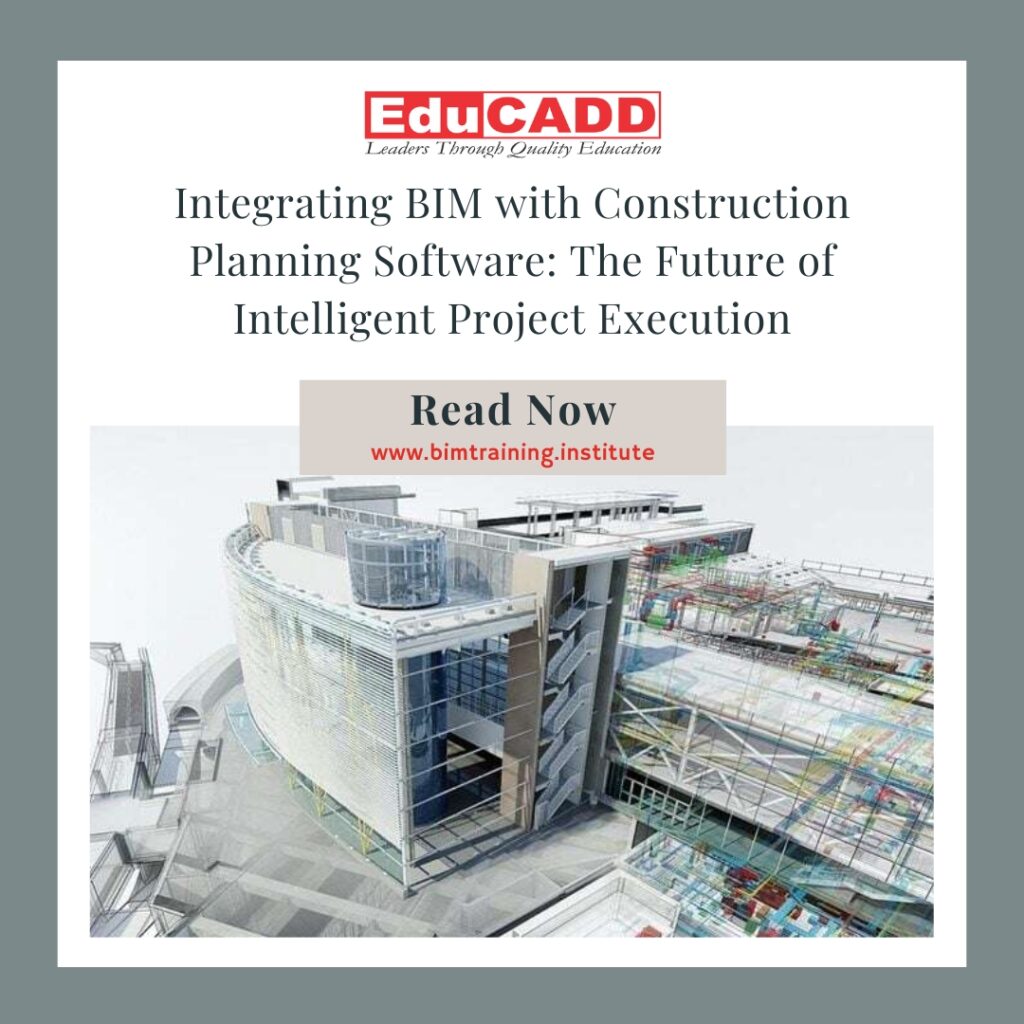
This article explores how integrating BIM with construction planning software reshapes project delivery. It covers benefits, challenges, workflows, technology frameworks, and implementation strategies in depth. Most importantly, it explains how companies can leverage this integration to build smarter, faster, and more efficiently.
Understanding BIM and Construction Planning Software
Before diving into integration strategies, it is essential to understand the core components involved. BIM represents a digital representation of physical and functional characteristics of a facility. It contains geometry, spatial relationships, quantities, and properties. In contrast, construction planning software focuses on scheduling, sequencing, resource management, and cost tracking.
Traditionally, design teams developed BIM models while planners created schedules separately using tools such as Primavera or MS Project. Although both systems supported project goals, they rarely communicated automatically. Therefore, any design change required manual updates in the schedule. This process consumed time and increased error risks.
However, BIM Construction Planning Integration software bridges this gap. The model becomes more than a visualization tool. It transforms into a dynamic database that informs timelines, resource allocations, and task dependencies. Planners can link model elements directly to schedule activities. As a result, teams create 4D simulations that combine 3D design with time sequencing.
Furthermore, integration ensures consistency. When the model changes, the schedule updates accordingly. Therefore, project managers gain real-time insight into potential impacts. This alignment between design and planning builds a foundation for data-driven decisions.
The Evolution from 3D to 4D and Beyond
Initially, BIM focused on 3D modeling. It improved coordination and clash detection. However, industry demands pushed BIM capabilities further. When teams started integrating BIM with construction planning software, 4D BIM emerged. This advancement connected design elements with construction timelines.
With 4D BIM, stakeholders visualize how the building evolves over time. They identify sequencing conflicts before construction begins. Moreover, they test alternative construction strategies digitally. Consequently, site disruptions reduce significantly.
Beyond 4D, integration enables 5D BIM, which incorporates cost data. Cost estimates link directly to quantities extracted from the model. As schedules change, budget projections adjust automatically. This capability enhances financial forecasting and risk management.
In addition, advanced integrations now support 6D and 7D dimensions. These dimensions include sustainability analysis and facility management data. Therefore, integrating BIM with construction planning software does not stop at construction. It extends throughout the asset lifecycle. Owners gain long-term operational intelligence from the same data framework.
Key Benefits of Integrating BIM with Construction Planning Software
The BIM Construction Planning Integration platforms delivers measurable advantages across project stages. First, it enhances collaboration. Designers, planners, and contractors work from a shared data environment. This transparency reduces misunderstandings and aligns expectations.
Second, integration improves schedule accuracy. Instead of relying solely on Gantt charts, planners analyze model-based task relationships. They detect spatial constraints that traditional schedules often overlook. As a result, they create more realistic timelines.
Third, risk identification becomes proactive rather than reactive. By simulating construction sequences, teams anticipate clashes between trades. They resolve conflicts before mobilization. Consequently, rework decreases and productivity increases.
Fourth, communication improves dramatically. Visual simulations help stakeholders understand project phasing. Clients and investors gain confidence because they can see progress before it occurs physically. This clarity supports better decision-making.
Finally, integrating BIM with construction planning software enhances resource management. Planners allocate labor, equipment, and materials based on precise model data. Therefore, they minimize waste and optimize site logistics.
Workflow Transformation Through Integration
Integrating BIM with construction planning software transforms workflows at every level. Traditionally, workflows moved sequentially from design to planning to execution. However, integration promotes concurrent collaboration.
During preconstruction, planners link model components to schedule tasks. They validate constructability using 4D simulations. Meanwhile, estimators extract quantities for cost analysis. Because data flows seamlessly, teams eliminate redundant entries.
During construction, field teams access synchronized models and schedules. When progress updates occur, the system reflects changes visually. Project managers track actual performance against planned sequences. Consequently, corrective actions occur faster.
Moreover, integration improves change management. When design revisions arise, planners assess schedule impacts instantly. Instead of manual recalculations, automated updates highlight affected tasks. Therefore, teams maintain control over timelines.
This workflow transformation fosters agility. Projects adapt quickly to evolving conditions while maintaining alignment between design and execution.
Enhancing Collaboration Across Stakeholders
Construction projects involve architects, engineers, contractors, subcontractors, and owners. Each stakeholder uses specialized tools. Without integration, coordination becomes fragmented.
By integrating BIM with construction planning software, organizations create a common data environment. All parties access consistent information. Designers understand scheduling constraints. Planners understand spatial limitations. Contractors understand design intent clearly.
Furthermore, cloud-based platforms enable real-time collaboration. Team members update data from different locations. This connectivity supports distributed project teams.
In addition, integrated dashboards provide shared performance metrics. Everyone monitors progress against milestones. Consequently, accountability improves.
Clear communication reduces disputes. When conflicts arise, visual simulations clarify responsibility and sequence. Therefore, projects maintain stronger relationships among stakeholders.
Improving Cost Control and Budget Accuracy
Cost overruns remain one of the biggest challenges in construction. However, integrating BIM with construction planning software enhances financial discipline.
Because quantities derive directly from the model, estimates remain consistent with design. When the schedule shifts, cost projections update automatically. This linkage prevents outdated financial reports.
Moreover, integration supports earned value management. Project managers compare planned versus actual costs in real time. They identify deviations early and implement corrective measures.
In addition, procurement planning benefits from accurate scheduling. Material deliveries align with construction phases. Therefore, inventory holding costs decrease.
Ultimately, cost transparency builds trust between contractors and clients. Integrated systems provide reliable forecasts throughout the project lifecycle.
Risk Management and Scenario Simulation
Risk management improves significantly when integrating BIM with construction planning software. Instead of relying on assumptions, teams test scenarios digitally.
For example, planners simulate different sequencing strategies. They evaluate productivity impacts and resource utilization. If a delay occurs, they model alternative recovery plans.
Weather disruptions, design modifications, and supply chain constraints can be assessed before decisions are finalized. Therefore, project leaders make informed choices based on data.
Additionally, safety planning becomes more effective. Visual simulations identify hazardous overlaps between trades. Teams design safer workflows proactively.
By reducing uncertainty, integration strengthens project resilience. It empowers teams to manage risks rather than react to crises.
Technology Platforms Supporting Integration
Several software platforms support integrating BIM with construction planning software. Tools such as Autodesk Navisworks, Synchro, Primavera P6, and Microsoft Project offer integration capabilities.
For instance, Autodesk Navisworks links model data with schedules to generate 4D simulations. Synchro specializes in advanced 4D planning and visualization. Primavera P6 integrates with BIM platforms for schedule optimization. Microsoft Project connects with third-party BIM tools for data synchronization.
Cloud platforms further enhance integration by centralizing data storage. APIs enable automated data exchange between systems. As technology advances, interoperability improves steadily.
However, organizations must select platforms carefully. Compatibility, scalability, and user experience play critical roles in successful implementation.
Challenges in Integration and How to Overcome Them
Although benefits are substantial, integrating BIM with construction planning software presents challenges. Data interoperability issues often arise due to incompatible formats. To overcome this, teams adopt open standards such as IFC.
Resistance to change also poses obstacles. Staff may hesitate to adopt new workflows. Therefore, leadership must invest in training and change management initiatives.
Another challenge involves data accuracy. If the model lacks detail, integration loses effectiveness. Consequently, teams must establish modeling standards and quality controls.
Cybersecurity concerns require attention as well. Cloud-based systems demand robust data protection measures.
By addressing these challenges strategically, organizations unlock the full potential of integration.
Implementation Strategy for Successful Integration
Successful integration requires a structured approach. First, organizations define clear objectives. They identify specific pain points integration aims to solve.
Next, they assess current technology infrastructure. Compatibility between BIM tools and planning software must be verified.
Then, pilot projects should be conducted. Small-scale implementation allows teams to refine workflows before full deployment.
Training programs are essential. Employees must understand both technical tools and collaborative processes. Therefore, ongoing education ensures adoption.
Finally, performance metrics should be tracked. Organizations measure improvements in schedule accuracy, cost savings, and productivity. Continuous evaluation drives long-term success.
Real-World Impact on Project Performance
Projects that prioritize integrating BIM with construction planning software report measurable improvements. Schedule delays decrease significantly. Rework reduces because sequencing conflicts are resolved early.
In infrastructure megaprojects, integration supports complex phasing strategies. High-rise developments benefit from optimized logistics planning. Industrial projects achieve better coordination between mechanical and structural systems.
Moreover, owners gain lifecycle benefits. Integrated data transitions smoothly into facility management systems. Therefore, operational efficiency increases after project completion.
The cumulative effect of integration translates into stronger competitiveness. Companies that adopt integrated strategies position themselves as industry leaders.
The Role of Digital Transformation in Construction
Digital transformation continues to reshape construction. Integrating BIM with construction planning software represents a critical component of this transformation.
As artificial intelligence and machine learning evolve, predictive analytics will enhance scheduling further. Real-time IoT data from construction sites may feed directly into BIM-based planning systems.
Additionally, augmented reality tools may overlay 4D simulations on actual job sites. This capability will support field decision-making and quality control.
Therefore, integration lays the groundwork for future innovation. Organizations that embrace it today will adapt more easily to tomorrow’s technologies.
Future Trends in Integrated Construction Planning
Looking ahead, interoperability standards will continue improving. Cloud ecosystems will unify design, planning, cost, and asset management platforms seamlessly.
Automation will reduce manual data entry. Digital twins will provide live operational insights. Sustainability metrics will integrate with scheduling systems to optimize environmental performance.
Moreover, regulatory bodies may mandate digital documentation for large projects. Consequently, integrated workflows will become standard practice.
The future of construction belongs to organizations that view integration not as an optional upgrade but as a strategic necessity.
Conclusion
BIM Construction Planning Integration software marks a decisive step toward intelligent project delivery. It connects design intelligence with execution strategy, transforming fragmented workflows into cohesive systems. Through improved collaboration, enhanced cost control, proactive risk management, and advanced visualization, integration elevates project performance across all dimensions.
Although challenges exist, strategic implementation and continuous learning ensure success. As digital transformation accelerates, integrated systems will define competitive advantage in the construction industry. Companies that invest in integration today will not only deliver projects more efficiently but also build a foundation for sustainable growth and innovation in the years ahead.