Modern construction projects demand accuracy, speed, and financial discipline more than ever before. Rising material prices, labor shortages, complex designs, and tight deadlines make budget control one of the most critical aspects of project success. Traditional estimation methods often rely on spreadsheets, manual calculations, and fragmented drawings, which increase the chances of human error and cost overruns. This is where BIM Cost Estimation Budget becomes a game-changing solution. Building Information Modeling is not just a 3D design tool; it is a powerful digital process that integrates geometry, quantities, scheduling, and cost data into a unified system.
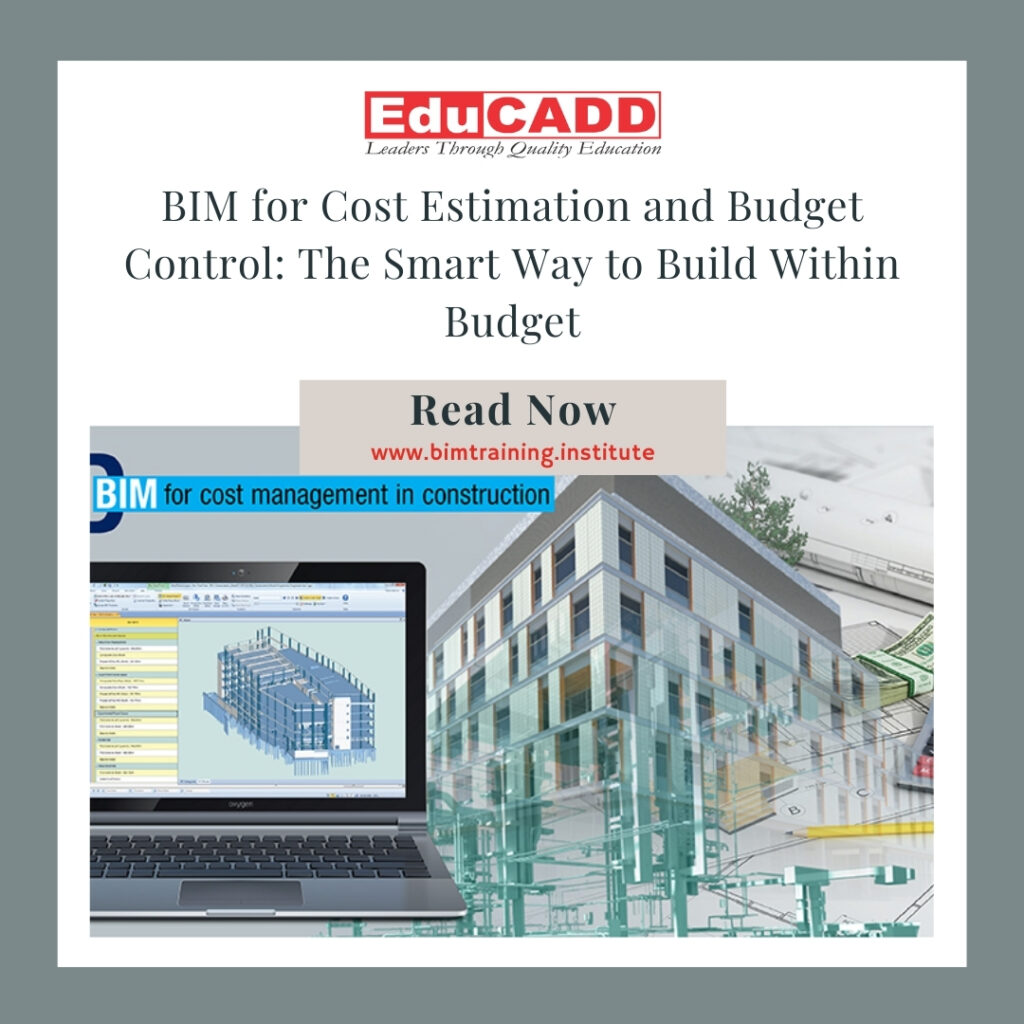
With intelligent modeling and real-time data extraction, project teams can predict expenses accurately, monitor financial performance, and prevent budget deviations before they occur. As the construction industry becomes more technology-driven, organizations that adopt BIM Cost Estimation Budget Control gain a significant competitive advantage by improving transparency, collaboration, and financial efficiency throughout the project lifecycle.
1. Understanding the Role of BIM in Modern Construction Finance
Building Information Modeling has transformed how financial planning is performed in construction projects. Instead of relying on isolated cost databases and manual quantity take-offs, BIM connects every design component to measurable and traceable financial data. Each wall, slab, beam, and fixture contains embedded information about material type, dimensions, and specifications, allowing automatic quantity extraction. As a result, cost estimators can work with precise data rather than assumptions. This structured approach significantly reduces discrepancies between projected and actual expenses. Moreover, BIM Cost Estimation Budget supports real-time cost evaluation, enabling stakeholders to see how design modifications influence the overall budget. Financial planning therefore becomes a continuous activity rather than a one-time estimate prepared at the beginning of a project.
2. Accurate Quantity Take-Offs Through Intelligent Modeling
Quantity take-offs form the backbone of any cost estimation process. Traditional methods require estimators to manually calculate material quantities from 2D drawings, which is time-consuming and prone to oversight. BIM eliminates this challenge by generating automatic quantity take-offs directly from digital models. Since every building element is parametrically defined, measurements remain accurate even when design revisions occur. Estimators can therefore rely on consistent data without reworking calculations repeatedly. BIM Cost Estimation Budget ensures that quantity extraction remains synchronized with design updates, which prevents costly miscalculations. This precision improves tender accuracy, strengthens budget forecasts, and allows project managers to allocate resources more effectively across different construction stages.
3. Real-Time Cost Updates for Dynamic Budget Monitoring
Construction projects often undergo multiple design changes due to client requirements, regulatory compliance, or engineering improvements. These changes affect costs immediately, yet traditional systems fail to reflect them quickly. BIM-driven cost estimation tools automatically update budgets whenever model elements are modified. This real-time connection between design and cost data enables project teams to make informed decisions without delays. If material specifications change or structural components are adjusted, cost variations become instantly visible. BIM Cost Estimation Budget therefore supports proactive financial management rather than reactive damage control. Stakeholders gain clarity on spending patterns and can adjust procurement strategies before costs escalate beyond control.
4. Improved Collaboration Between Design and Finance Teams
Cost estimation is no longer an isolated responsibility handled solely by estimators. It requires collaboration among architects, engineers, contractors, and financial planners. BIM platforms enable seamless communication by allowing multiple stakeholders to work on a shared digital model. Design teams can visualize the cost implications of their creative decisions, while finance teams can suggest economical alternatives without compromising quality. This collaborative ecosystem fosters transparency and minimizes misunderstandings. Through shared dashboards and cloud-based updates, BIM for Cost Estimation and Budget Control aligns technical and financial objectives. As a result, projects experience fewer disputes, reduced rework, and better coordination between planning and execution phases.
5. Enhanced Cost Forecasting with Data-Driven Insights
Historical data plays a crucial role in predicting construction costs. BIM systems store project data in structured formats, making it easier to analyze trends and compare similar developments. Estimators can reference past projects to understand material consumption patterns, labor productivity rates, and equipment utilization costs. Predictive analytics tools integrated with BIM further improve budget forecasting accuracy. These insights allow decision-makers to anticipate risks and prepare contingency funds in advance. By leveraging digital intelligence, BIM for Cost Estimation and Budget Control transforms forecasting from guesswork into a reliable analytical process. Companies can therefore plan investments with greater confidence and minimize financial uncertainty.
6. Integration of 5D BIM for Comprehensive Cost Planning
5D BIM extends traditional modeling by incorporating time and cost dimensions into 3D design environments. This integration provides a holistic view of project development, allowing estimators to link construction schedules with financial planning. When project timelines shift, associated costs automatically adjust based on labor, material delivery, and equipment deployment. This dynamic linkage improves accuracy in cash flow projections and funding requirements. Project managers can simulate multiple construction scenarios to identify the most cost-effective approach. With BIM for Cost Estimation and Budget Control, stakeholders gain a synchronized system where schedule planning and budget allocation move together, preventing financial surprises during execution.
7. Early Detection of Budget Risks and Cost Overruns
Budget overruns remain one of the most common challenges in construction projects. Delayed detection of financial risks often leads to emergency funding requirements and project delays. BIM tools provide visual dashboards and automated alerts that identify potential cost escalations at early stages. If project expenses exceed planned thresholds, the system highlights deviations for immediate action. Risk analysis modules evaluate cost-sensitive components and suggest alternative materials or construction methods. Through predictive monitoring, BIM for Cost Estimation and Budget Control strengthens financial discipline and prevents unnecessary expenditure. Early intervention therefore becomes possible before minor deviations develop into major financial setbacks.
8. Streamlined Procurement and Resource Allocation
Procurement decisions heavily influence project budgets. Incorrect material orders, supplier delays, and price fluctuations can disrupt financial planning. BIM-based estimation systems generate accurate material schedules that align with construction timelines. Procurement teams can therefore order precise quantities without excessive surplus or shortage. Vendor comparisons also become easier since material specifications remain standardized within the model. BIM for Cost Estimation and Budget Control optimizes resource allocation by matching procurement schedules with budget availability. This strategic alignment reduces wastage, improves supply chain efficiency, and ensures that funds are utilized where they generate maximum value.
9. Transparency and Financial Accountability Across Stakeholders
Large construction projects involve multiple investors, consultants, and contractors. Maintaining financial transparency across such diverse groups can be challenging. BIM platforms centralize project information within accessible digital environments, ensuring that all stakeholders review the same cost data. Real-time dashboards present updated expense reports, contract values, and payment schedules. This transparency builds trust among project participants and simplifies auditing processes. Since every financial change is recorded systematically, accountability improves significantly. Organizations implementing BIM for Cost Estimation and Budget Control benefit from traceable financial workflows that reduce disputes and strengthen governance throughout project delivery.
10. Reduction of Rework and Associated Financial Losses
Rework consumes both time and money, often arising from design inconsistencies or miscommunication between teams. BIM minimizes such risks by detecting clashes and design conflicts before construction begins. Automated clash detection tools identify overlapping systems, structural mismatches, and spatial conflicts during virtual modeling stages. Preventing these issues early eliminates expensive on-site corrections and material wastage. The financial impact of reduced rework can be substantial, especially in large infrastructure projects. By ensuring design accuracy and coordination, BIM for Cost Estimation and Budget Control protects budgets from unnecessary strain and supports smoother construction workflows.
11. Lifecycle Cost Analysis for Long-Term Financial Planning
Construction budgeting should extend beyond initial building expenses. Maintenance, operations, and renovation costs significantly affect total lifecycle expenditure. BIM enables lifecycle cost analysis by storing detailed asset information that supports facility management after project completion. Owners can evaluate energy consumption, maintenance schedules, and replacement cycles using digital twins of physical structures. These insights help organizations plan operational budgets effectively and reduce long-term financial burdens. BIM for Cost Estimation and Budget Control therefore supports sustainable investment strategies by considering both construction and operational phases within a unified financial framework.
12. Supporting Sustainable Construction Within Budget Limits
Sustainability has become a priority in modern construction, yet green materials and energy-efficient systems often involve higher upfront costs. BIM tools help evaluate cost-benefit ratios of sustainable design alternatives through performance simulations. Estimators can compare traditional materials with eco-friendly options based on durability, energy savings, and maintenance expenses. This analytical approach ensures that sustainability goals align with financial feasibility. BIM for Cost Estimation and Budget Control empowers decision-makers to select environmentally responsible solutions without exceeding budget constraints. As a result, projects achieve both economic efficiency and ecological responsibility.
13. Automation and AI Integration for Smarter Estimation
Emerging technologies such as artificial intelligence and machine learning further enhance BIM-driven cost estimation processes. AI algorithms analyze historical project data to recommend optimized budgeting strategies and identify cost anomalies. Automated workflows reduce repetitive manual tasks, allowing estimators to focus on strategic planning. Cloud-based BIM platforms also support remote collaboration and real-time financial tracking. As automation continues to evolve, BIM for Cost Estimation and Budget Control becomes faster, more accurate, and increasingly intelligent. This technological synergy improves productivity while maintaining strict financial control across complex construction environments.
14. Competitive Advantage Through Digital Financial Management
Construction companies adopting digital solutions gain a strong competitive edge in the marketplace. Clients increasingly prefer contractors who demonstrate financial reliability and transparent budgeting practices. BIM-based cost estimation showcases professionalism by providing detailed projections, visual reports, and scenario-based planning. This capability enhances client confidence and improves bid success rates. Furthermore, efficient budget control strengthens profit margins by minimizing wasteful spending. Organizations leveraging BIM for Cost Estimation and Budget Control position themselves as forward-thinking industry leaders capable of delivering projects on time and within financial expectations.
Conclusion
Effective financial planning determines whether construction projects succeed or struggle with delays and overruns. Traditional estimation approaches cannot keep pace with modern project complexity, making digital transformation essential. BIM provides a structured and intelligent system that connects design data, quantities, schedules, and costs within an integrated environment. From accurate quantity take-offs and real-time budget updates to lifecycle cost analysis and AI-driven forecasting, BIM strengthens every aspect of financial management. Organizations that implement BIM Cost Estimation Budget achieve greater transparency, improved collaboration, and enhanced decision-making throughout project lifecycles. As the construction industry moves toward smarter technologies, BIM-driven budgeting will continue to redefine cost efficiency and set new standards for project excellence.